
Filter:

Latest Posts

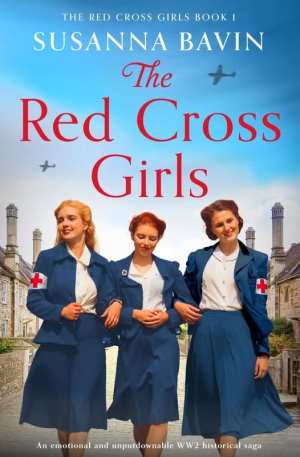
Now that The Red Cross Girls is available to be requested by NetGalley reviewers, I thought it was time for me to introduce the book and the characters to you.

h

When I wrote the series proposal for my editor at Bookouture, this is how I started it:


Three determined women,

three damaged hearts.

When first love led to heartache,

is it safe to believe in second chances?


I don't mind telling you that I worked hard to get the wording exactly right! My editor loved it - and I hope you're intrigued by it too.


This is the background information I put in the proposal:


The new series takes up where The Home Front Girls series left off. A Baby for the Home Front Girls (book 5) finished in December 1942. The action now moves from Manchester to the Forest of Bowland in Lancashire (nearest city: Lancaster) and the books feature a new character OLIVIA (LIVVY) HAMPTON and two characters from the Home Front Girls series whom the readers will already be familiar with, though without knowing them closely - DULCIE GRANT and ROSALIND RUSHTON.


Dulcie is DEBORAH's sister-in-law. Deborah’s bullying brother ROD, Sally’s ex-boyfriend, was sent up to Barrow-in-Furness at the start of the war to work in shipbuilding. There, he met and married Dulcie at top speed. Dulcie has never met her in-laws, but she writes to Deborah and MRS GRANT. When Deborah wanted to leave home and move into Star House (A Wedding for the Home Front Girls, book 4), it was a letter from Deborah to Mrs Grant that swung it for her. Likewise, when Deborah and Patrick were having problems, Dulcie sent supportive letters.


Rosalind Rushton joined the Food Office as Deborah’s new colleague after Sally went to work in the salvage depot. Rosalind and Deborah rubbed along well enough in a professional sense without becoming friends socially. In A Baby for the Home Front Girls (book 5), it transpired that Rosalind was put into the Food Office to undertake a secret investigation into the theft of food coupons. Having got to the bottom of that, she was then moved to the salvage depot to fill a temporary gap. At the end of the book, she told the Star House residents that she was due to be moved into a new job elsewhere. Obviously, this being wartime, she wasn’t allowed to provide details.


* * * *


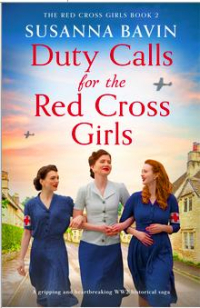
I hope I've whetted your appetite for this new series and that you're keen to meet Dulcie and Rosalind properly - especially Dulcie, whom you've been hearing about ever since book 1 in the Home Front series.


Join me next time to find out more about the war work aspect of the series.

h

* * * *


Link to Kindle edition


The paperback edition can't be ordered just yet - I'll let you know when it can be.

Ten years ago, back in June 2016, the literary agent Laura Longrigg (now retired) of MBA Literary Agents liked my submission and wanted to see the full MS of The Deserter's Daughter. And d'you know... I nearly deleted her email...


At the time I'd had various rejection letters. At one extreme I received one that took the term "standard rejection letter" to new heights by being so standardised that it applied to non-fiction writers as well as novelists; and at the other extreme, there was the one that raved about how publishable my book was, and ended with the words, "Good luck placing it elsewhere." Hm.


I'd also had a string of rejections along the lines of "compliment, compliment, but..." Ah, those buts!


At the time I didn't realise how lucky I was to get this feedback. I realise now that standard letters are the norm and personal rejections with comments are unusual. I was most fortunate to get these snippets of feedback.


And I used them. The compliments gave me a boost, but it was those buts I concentrated on. I also found some brilliant "how to" books that helped me sharpen up my writing.


The end result was another draft of the novel. In June 2016, I sent out email submissions around 4pm one Friday afternoon, intending to send paper submissions the following morning. (Are there any agents today who want paper submissions?) On the Saturday morning I glanced at my emails and there were two from literary agents. Automatic responses, of course - and I almost deleted them unopened.

 ortunately for me,

Fortunately for me, I opened them instead. Yes, the first was indeed an automatic "thank you - we have received it" message. I opened the second one and my immediate thought, as my finger hovered over the delete button, was: That's a long automatic response.

 nger obviously had more sense than I did, because it didn't hit delete

Well, my finger evidently had more sense than I did, because it didn't hit delete and that gave me time to read the message.... which was a personal email from Laura Longrigg at MBA, sent around 9pm on Friday evening, saying she had started reading my submission on the way home, was loving it and wanted to see the full MS.


Long story short. I ended up with offers of representation from two agents, but while I was enormously pleased and flattered by the second agent's interest, there was never any doubt in my mind. Various writer friends advised me to meet with both agents before deciding what to do, but I didn't feel the need for that. Out of the agents I submitted to, and also those I didn't get the chance to submit to because Laura responded so swiftly, she was always top of my list and I was delighted to be represented by her.


Laura retired a few years ago and now I am delighted to be represented by Camilla Shestopal of Shesto Literary.


As for the past ten years... Since 2017, I've had 25 book published under three different names and there are six more books in the pipeline. Two come out this September...


....and the other four (two more Calico House and two more Red Cross Girls) will be released in 2027.


If you're in the querying trenches, good luck!


After the Silence....

Posted on 1st June, 2026

The last blog I wrote was way back on the 10th of April - - and now it's 1st of June. I must admit I ventured back here expecting my website stats to have fallen off the proverbial cliff, but instead the numbers are as high as ever. In the past 30 days, my blogs have been visited by 1,000 different people. So, if you're one of those people - thank you xxx


It isn't just my blog that has been neglected. My whole website has been. There haven't been any updates on my Welcome page since April 10th.


And if you're a regular visitor to my site, you'll know that this really isn't at all like me. I've had this site since the summer of 2014, since which time (until recently) I have blogged virtually every week and updated my front page with my latest news every single week except over Christmas.


What changed? What made the website fall by the wayside?


Pressure of work, that's what.


Between the beginning of August and the end of the first week of May, I wrote three books. Yes, I do love writing, but it was jolly hard work and, to be honest, it was too much, not least because at the same time I also had to go through the editing process with other books - and the thing about the editing process is that each step comes with a tight deadline, meaning the book that's being written has to be set aside so the editing/copyediting/proofreading can take precedence.


Anyway, I'm in a better place now and I've been building up to coming back here to the website and the blog. Thanks for sticking around xxx


The Dreaded Synopsis

Posted on 9th April, 2026

Here's how naive I used to be. There was a time when I honestly believed that the sole purpose of the synopsis was to get an agent interested in your work, and that once you'd bagged an agent, that was it - - no more synopsis-writing ever again!


As I say, I was naive in those days. The truth is that you never stop writing the dreaded synopsis.


A couple of examples from my writing life:

h

- When my agent placed my first book, The Deserter's Daughter, the publisher also wanted first dibs on my next book. That wasn't good enough for my agent and she said that I would produce a synopsis, and if they liked it, they could give me a contract for it up front. She then rang me up and said, "I need a synopsis from you in the next forty-eight hours." And that was what I had to produce... from scratch.


- My first books written as Maisie Thomas were those in The Railway Girls series. The way it worked was this. Penguin would ask me if I wanted to write another three and I'd say yes. So then they'd say, "Write a series proposal" - in other words, three synopses - and they'd decide if they liked what I'd come up with. (They always did.)


The point is that if you're an author who wants to work with a publisher, then the synopsis is a part of your professional life.


So, how about some tips for writing a synopsis:


- Title and genre at the top, please! Plus your strap-line.


- Use the present tense and express yourself clearly.


- You don't have to include every single thing in the synopsis. What you need is a broad outline of the main plot.


- Likewise, you don't have to include all the characters - but do introduce your main character early on. 


- Make the when and where clear.


- Don't be tempted to descibe a really important event in detail. It sounds strange, but the more detail you add to an event in a synopsis, the less important it feels. Don't fall into that trap.


- Read the instructions! If you're submitting to an agent or editor, read their guidelines, and then stick to them.


- It's a synopsis, not a blurb. Don't leave cliffhangers. The agent/editor wants to know if you can construct a plot effectively, and they won't know that if you keep back important plot points. Sprinkle those spoilers! They'll show how good you are at creating a compelling plot.


- Spaces on the page look good. This was one of the best pieces of advice I was ever given about writing a synopsis. Yes, I know that if you're told to fit the entire synopsis onto one side of A4, the temptation is to cram everything onto the page - but, honestly, an empty line in between paragraphs looks good. It makes you look professional, because it shows you have worked hard to nail your synopsis and you care about the presentation of your work.


- Don't try to cheat to way to a longer synopsis by using a smaller font or wider margins. All you'll do is make it more difficult to read. Also, you don't want to annoy the agent/editor.


* * * *


So there we have it - my tips for writing a synopsis. It's a tricky thing to write and I don't know anyone who enjoys producing them. But they do an important job and it's well worth putting in the effort. Good luck!


(If you have another tip to offer, drop it into the comments below. Thanks.)


This week, I'm delighted to welcome Eva Glyn back to my blog. Given what time of year it is, Eva is going to talk about the delight of finding Easter eggs in stories...


EVA GLYN ON THE MISTRESS OF THE EASTER EGG


It was a little while ago when one of my editor’s comments in the margin of my manuscript took me by surprise:


‘An Easter egg for your readers – how lovely!’


An Easter egg? In the story’s timeline it was June, and the setting for the scene was a bookshop. Nothing to do with confectionery. Then the penny dropped. The shop was the home of The Dubrovnik Book Club, but the book was The Croatian Island Library, and I was taking my readers back there for just a few minutes to see how Luna and Claire were getting on.


Looking it up, Easter egg in this context is a known publishing term; adding a little treat for loyal readers in a way that won’t spoil the story for those picking up one of your books for the first time. A sort of ‘if you know, you know’ moment, and as a reader I love them.


Maisie is an absolute mistress of the literary Easter egg and I feel a little glow whenever I discover one. The Worker Bee café is a particular favourite, and seeing it leap from The Railway Girls books to other series gives me with a warm fuzzy feeling every time. Setting the books in wartime Manchester helps, but Easter eggs are about more than locations, they’re about characters and events, and even tragedies; from The Railway Girls into the head of a character in Wartime Hotel series.


An Easter egg is hard to define, but it’s normally no more than a fleeting glimpse or a passing comment. It’s ephemeral and easy to miss, but it has to fit in with the story. In The Croatian Island Library I tried to shoehorn in another one, a chance meeting with a character from my first Croatian novel, The Olive Grove. But however I pushed, shoved, manipulated and squeezed, it had to come out because it added nothing at all to the current plot.


Having just finished Dreams Come True at the Wartime Hotel I have a new favourite Easter egg. Right at the end there’s a comment from a rather wonderful secondary character that made me realise just exactly who she was. Perhaps I should have tumbled it before, as the book she first appears in is my absolute favourite of Susanna’s, but it doesn’t matter because I’m still smiling at the discovery. And hoping that in future Wartime Hotel books she plays a bigger part.

The Dreaded Structural Edit

Posted on 12th February, 2026

Some authors plan their books - and others go with the flow and tackle the changes at the editing stage.


Me? I'm a planner. I started out as a pantster (writing by the seat of the pants). For years, as someone who wrote purely for my own enjoyment, that was how I did it.


Then I got an agent, Laura Longrigg at MBA, who found a publisher, Allison & Busby, for The Deserter's Daughter.


A&B also wanted to contract me for a second book. As it happens, I had two other sagas that Laura could have offered them (The Sewing Room Girl and The Poor Relation), but Laura said no. The Deserter's Daughter was set in the 1920s while The Sewing Room Girl went from late Victorian to early Edwardian, and The Poor Relation was late Edwardian.


"The Deserter's Daughter was 1920s, so it's best to offer another 1920s book," said Laura. "You need to get a synopsis written ASAP and it has to be as strong as the plot of The Deserter's Daughter."


Talk about panic! Well, I did get it written from scratch, and it wasn't so much a synopsis as a highly detailed plan six plages in length. It simply grew as I wrote it. (That book was A Respectable Woman.)


These days I plan every book in great detail in advance. Not only that, but I send the plan to my editor so she can give feedback. This is then incorporated into another version of the plan and back it goes again to see what she thinks.


Lots of authors tell me that they couldn't possibly plan in such detail and what I always say to them is that I don't regard it as planning - I see it as the structural edit. The more the editor and I have agreed upon in advance, the less weighty the editing process is going to be.


I know lots of people hate planning - but the thing I hate above all others in the writing/publishing process is the structural edit.


In case you aren't familiar with the terminology, there are two kinds of edit - the surface edit and the structural edit.


Here's an example of a surface edit. In The Deserter's Daughter, the use of guineas is important. My editor said I should explain the different between a guinea and a pound, which I did in the context of Evadne being snooty about how Alex paid for things. One simple addition to the text - and that was that. Dead easy.


A structural edit on the other hand means that you're asked to change A, and that means that, later on in the book, B needs to be changed as well. And now C can't stay the same. And if C is different, then D has to be as well.... You get the idea. The most horrendous sort of structural edit involves a lot of rewriting - not to mention the accompanying angst.


An example of a structural edit. My editor said, "I think this needs to happen in a different order," and basically she picked up the end of October and dumped it at the beginning of September. As well as all the plot changes I had to make, I also had to change the weather, the meals, the clothes, the hours of daylight....


And then there was the editor who said, "I don't think the wedding should happen in the middle of the book. I think it should happen at the end."


And the one who said, "I think page 50 is too long to wait. I think it should happen as near the start of the story as possible." Aaagh!


And all that is why I now do my structural editing before I actually start to write the book.


This week I am delighted to welcome Eva Glyn (who also writes as Jane Cable) to my blog to talk about a particular aspect of her latest novel, The Croatian Island Library.

h


Library is the third of three linked but independent books. The other two are The Dubrovnik Book Club and The Santorini Writing Retreat. Each book is notable for Eva/Jane's talent for creating real-life settings and transporting the reader to the place in question, as well as being stories you want to dive into.


Here's what Eva/Jane says about the friendships in her books:


WHY FRIENDSHIP STORIES FASCINATE ME


In truth I find stories of friendship far more fascinating than romances. Perhaps because they are so universal, and deeply engrained in our experience. Perhaps because I’ve had far more friends than lovers and they’ve been much more varied, so why wouldn’t I want to write about them?


I generally start by selecting three, or in the case of The Dubrovnik Book Club, four very different characters from the motley crew rumbling around in my head, then throw them together, and see what happens. At first they are bound to circle each other a bit, while probably being terribly nice (I struggle so hard to write nasty people as viewpoint characters), but then a few tentative connections begin to form, and a few cracks to appear. Because as a writer you need the cracks to let in the light.


However disparate the people, it’s important to me that their friendship forms naturally, as it would in real life. The key to this is getting to know the protagonists really well before starting to write so when they hit the page they are fully formed human beings. You could say that the first friendships in any book I write are the bonds I form with the imaginary people in my head.

 h


The viewpoint characters in The Croatian Island Library are Ana, the thirty four year old captain of the catamaran who loves her life on the waves; librarian Lloyd, a British widower in his fifties beginning to move beyond the sharpest of his grief; and twenty-two year old crew member Natali who wants nothing more than to keep her head down in case the others realise how stupid she is.

h

Lloyd came to me first. In fact he’d been running around in my head for a while; a thoughtful, intelligent man whose loss left his world in tatters but is beginning to realise he needs to move on. But as I imagined him on the bus from Dubrovnik airport I realised he’d been to Croatia as a student, his experiences leaving him so consumed with guilt he’s determined to keep his earlier visit a secret.


Next was Ana. She’s a friend of Meri’s, one of the minor characters in The Dubrovnik Book Club, and just as feisty. Or so she appears. But the reality is that she’s facing an uncertain future, terrified of losing her boat, and torn between what’s in her heart and familial duty. None of which can she feels she can share with her crew. She’s the project leader after all.


And Natali, dear Natali. She’s been told she’s stupid so often she genuinely believes it, and far prefers the company of her dog, Obi, to humans because Obi loves her unconditionally and never judges. She does want to connect with the others though, she can just never work out what to say. Until, of course, something happens which starts to pull them together.


Being aware I’m writing this for Susanna’s readers, I’m sure the underlying of the premise of friendship forged through adversity sounds familiar. It’s a saga, isn’t it? Well obviously The Croatian Island Library isn’t historical, so technically it can’t be, but to all intents and purposes, perhaps it is.


  • It’s a story of everyday people, told in an uncomplicated manner but with tons of emotion

  • It’s set firmly in a location that readers come to know well and where the sense of community is strong

  • There are obstacles a plenty for the characters to overcome, but there’s always hope

  • And a little romance along the way.

    h

For Susanna, writing her fabulous Wartime Hotel series as Maisie, the unlikely friendship is formed between Kitty, Lily and Beatrice. For me it’s Ana, Lloyd and Natali. But it just goes to show the universal power of stories where friendship conquers all.


* * * *


You can visit Eva's author page on Amazon by clicking here


So... Who Chooses Your Book Cover?

Posted on 23rd January, 2026

A while ago I wrote a blog called So - Who Chooses Your Book Title? based on the common misconception that authors choose their own titles. (If you'd like to take a look, here's the link.)


I also wrote a blog based around the idea that professional authors only write when inspiration strikes. As if! (If you haven't read that blog, here's the link.) Incidentally, this blog includes a piece of advice for all writers, professional and not-yet-professional, that everyone finds helpful.


Another common misconception loved by readers is, "...and of course, you design your cover, don't you?"


Er... no.

h

Sorry to disappoint you, but it really doesn't work that way if you are traditionally published. What usually happens is that your publsher will present you with the almost-finished cover design and say, "We hope you love this as much as we do."


At that point, you can ask for very small - and I do mean very small - alterations, but that's it. An example would be to point out that a character on the cover should have a wedding ring. Or there might be something that is wrong for the year of the story that needs to be airbrushed out.


But essentially, the cover you're sent is the final one.


That doesn't mean an author never gets the chance to have meaningful input. For example, with the Railway Girls eries (written as Maisie Thomas) I was asked for physical descriptions of the girls and then I was sent photos of possible models - though it wasn't up to me to make the final choice.


When I wrote the descriptions of Joan, Mabel and Dot for book 1, I said Joan should have a young-looking face - and she certainly does. There she is, in the centre.


Because the Railway Girls covers featured trains, my husband, who knows his stuff where trains are concerned, was always asked to check that the train that was used was historically correct.


The train used for the cover of book 3 was actually the Royal Train from earlier in the century - which is why the roof of the train is slightly misted. The Royal Train had skylights in the carriages, and these needed to be faded out in order to give the train a 1940s look.


I was also consulted over the covers for books 2, 3 and 4 in the Surplus Girls books, my 1920s series (written as Polly Heron).


Book 2, The Surplus Girls' Orphans, and book 3, Christmas with the Surplus Girls, shared an original 1920s image, which, after some discussion was chopped in half to share out.


Here's the original picture:


So there you have it. No, authors don't usually get to choose their own titles... and they definitely do not work only when inspiration strikes... and they're lucky if they get to have serious input into their covers as well. You heard it here first!


A New Series in the Offing...

Posted on 4th December, 2025

I am delighted to share my wonderful news with you. I have signed a new contract with Bookouture to write a new WW2 saga series for them.


Here is the news release from Bookouture:


We’re pleased to announce that Associate Publisher Jess Whitlum-Cooper has agreed a three-book World English rights deal, including audio, with Camilla Shestopal at Shesto Literary, for a new historical fiction saga series from Susanna Bavin. The first book in this series will publish in September 2026.


Susanna said,

‘I’m delighted to have signed another contract with Bookouture. The whole team work so hard for their authors and I love being part of the Bookouture family. I’m also thrilled to bits to be working with the talented Jess Whitlum-Cooper once more. She is a terrific editor and always brings out the best in my books.'


Jess said,

‘I am so pleased to have a new series from Susanna coming to the Bookouture list next year. I know her fans will love these new stories, and I cannot wait for readers to discover them.'


* * * *


I'll tell you more about my new series in due course, but for now I'll say that I'm very excited about these books and I hope you're going to love them!


The Day Maisie Was 'Outed.'

Posted on 26th November, 2025

It was this week back in 2021 when I 'outed' myself! Up until then, my Maisie identity was a secret known only to a handful of people in the book world. But I was finally allowed to tell the world that Maisie, Susanna and Polly were all the same person! It was an exciting day.


I took lots of photos of my books and audiobooks, with the three author names all mixed up together.... with a little help from my furry friends - black & white teddy bear Alf and naughty tortie Cassie, both sadly no longer with us.